Inside a colorful Berlin burger restaurant with a ‘vibrant architectural experience’ | News
anchor
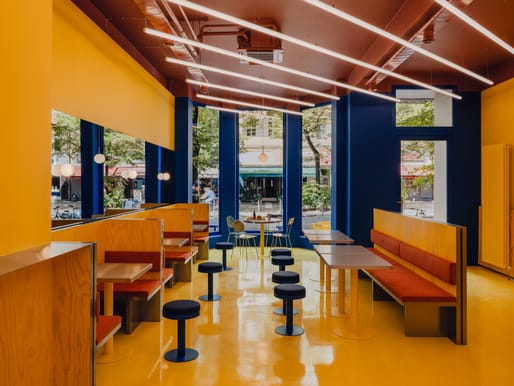
Image credit: Pionstudio
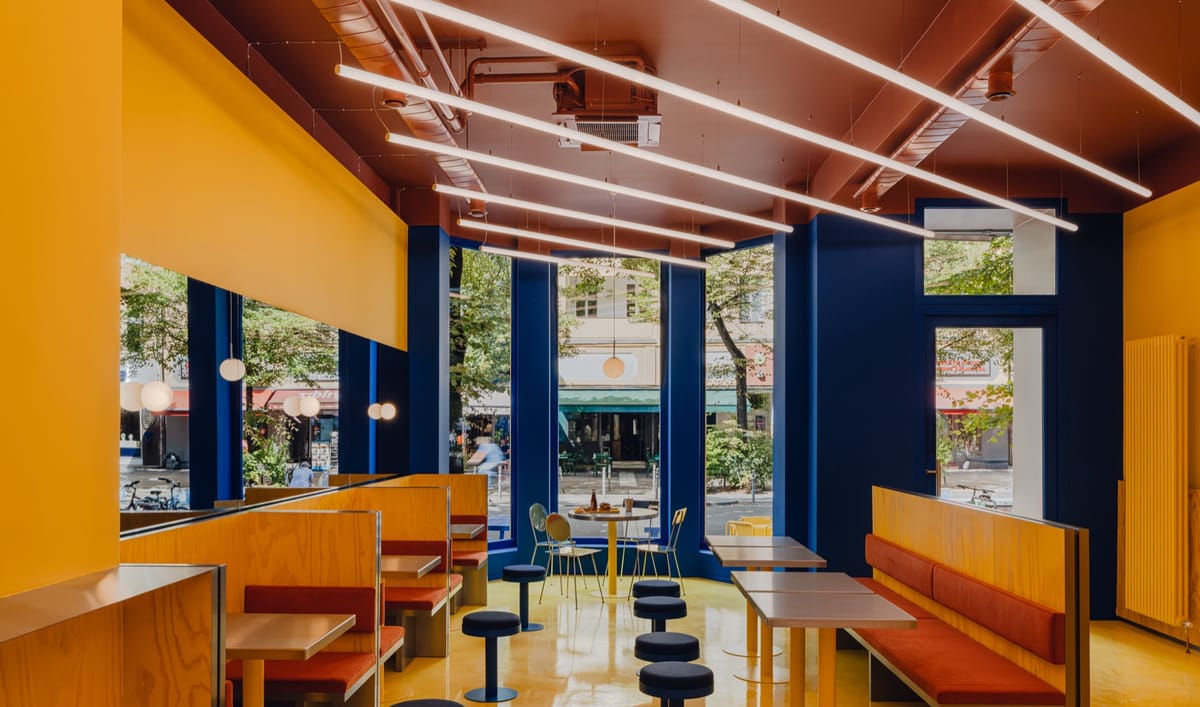
Berlin-based Bruzkus Greenberg has completed the design of hamburger brand Flip N Fry’s new flagship restaurant in Berlin, transforming a former family restaurant into a “vibrant architectural experience.” Conceived in collaboration with lighting designers Studio De Schutter, the scheme uses bold colours, materials, textures, bespoke furnishings, and lighting to create a memorable visitor experience.

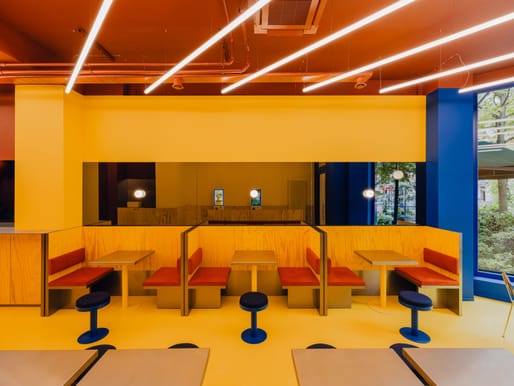
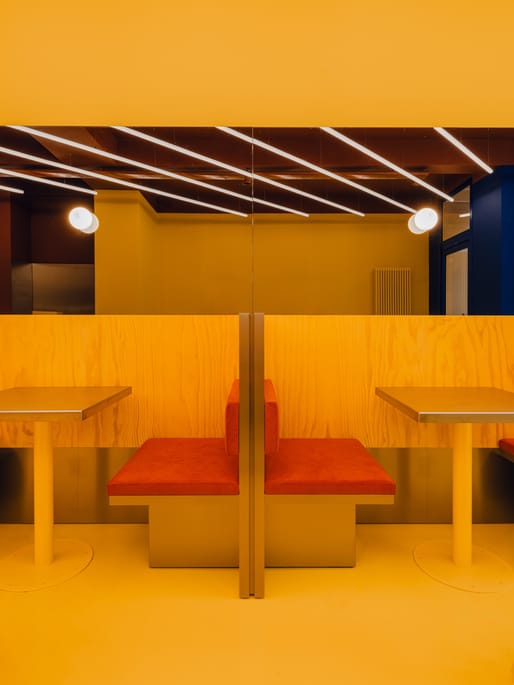
Across the interior, strong color zoning organises the restaurant’s long, narrow, ground-floor space. The ordering area and main dining zone are rendered in yellow, while the food pickup zone and kitchen are defined by terracotta surfaces. A continuous terracotta ceiling links the zones across the space. A blue threshold marks the transition between exterior and interior and highlights a bay-window seating nook, while back-of-house areas adopt a blue-and-white palette. A stainless-steel datum line runs throughout, visually binding the different zones.


The emphasis on bold colors is accompanied by considered textures. Yellow surfaces are expressed through stained wood rather than paint, keeping the grain visible. The epoxy flooring introduces a glossy reflectivity, and the terracotta counter and adjacent walls use small mosaic tiles to add scale to the otherwise bold color fields. Stainless-steel trim provides a subdued sheen that ties the palette together.


The project also saw the reinstating of the restaurant’s historic side entrance to create more efficient circulation. The designers also reconfigured the bay window, previously an entrance, as a dedicated family seating area. Expanded glazing improves visual transparency from street to interior.

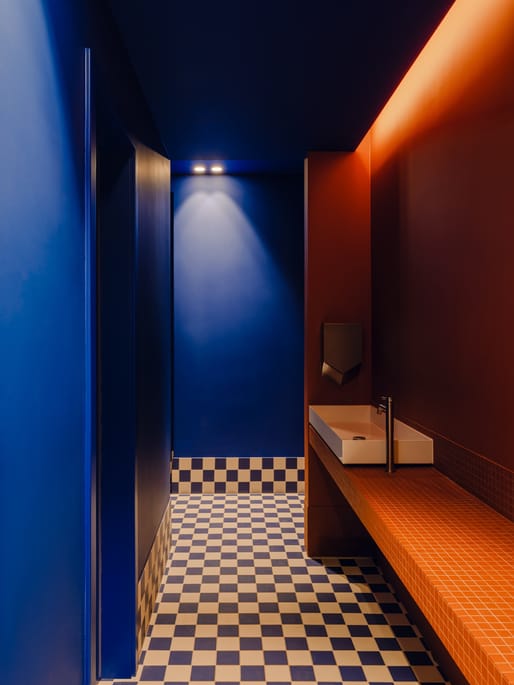
The lighting scheme forms a unifying geometric pattern visible from outside, offering a graphic signature intended to carry across future locations. Custom furniture in stainless steel, dyed wood veneer, and fabric defines circulation, seating, and counters while reinforcing the restaurant’s material and spatial identity.

link